
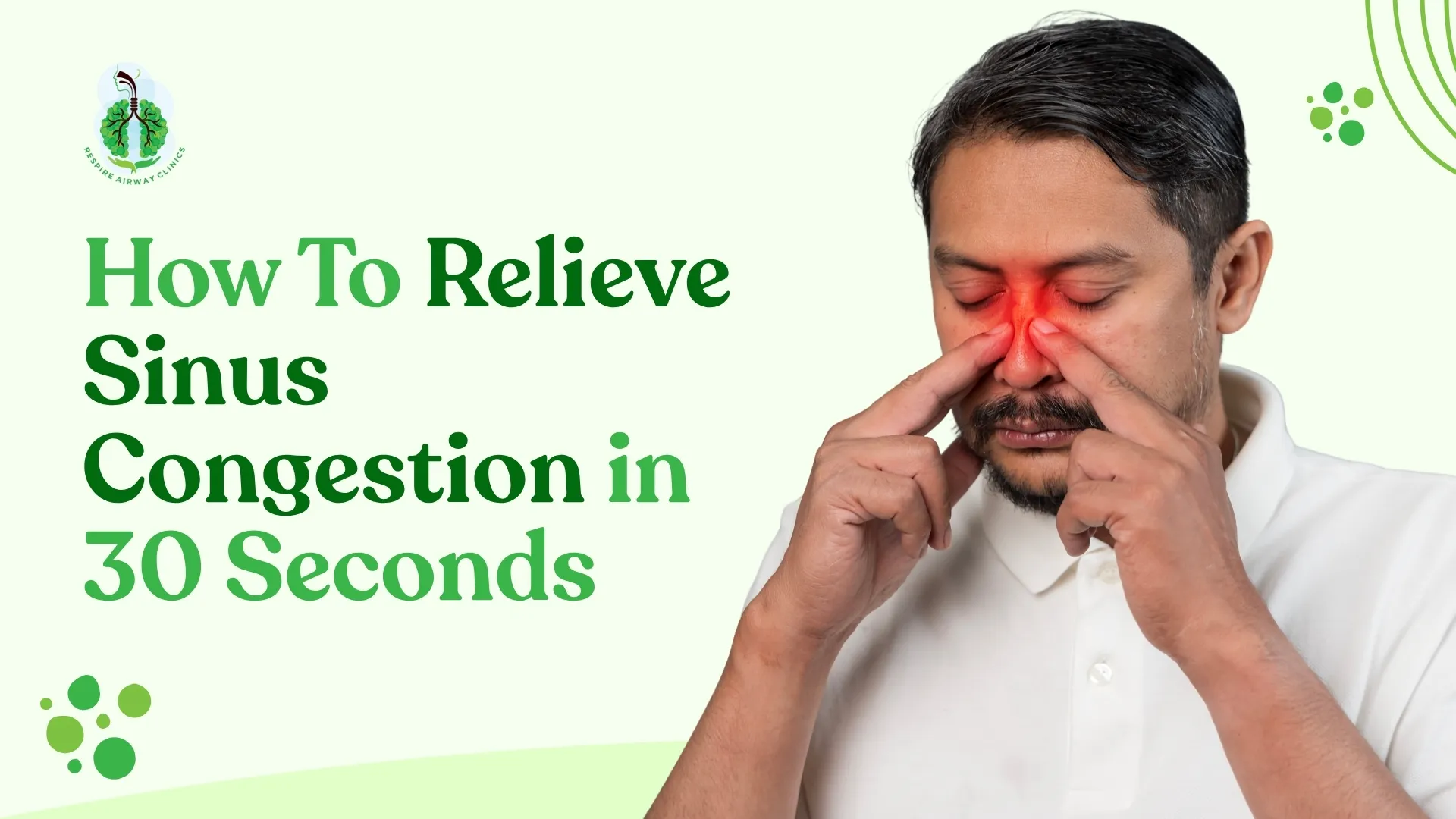
If you have ever had sinus congestion, you know how uncomfortable it can feel. Your head feels heavy, your nose is blocked, and it even becomes hard to breathe. Well, the good news? There are various ways to reduce sinus pressure in under a minute following a simple massage and pressure technique. It stimulates sinus drainage and improves airflow.
These methods can be done anywhere, when you have no medication or equipment, at home, in the office, or while traveling. Let's check out how to get rid of sinus congestion quickly, in as little as 30 seconds.
What Causes Sinus Congestion?
So, why does sinus congestion happen? Sometimes mucus gets trapped in the sinus cavities. It usually happens around your forehead, cheeks, and the area behind your nose. As a result, you experience pressure and discomfort. Some of the most common causes are:
- Sinus infections
- Cold or viral infections
- Allergies
- Environmental irritants
- Nasal structural issues
When mucus gets trapped, the pressure increases that is inside the sinus cavities. It causes pain, headache, and a blocked nose.
According to research published in the National Center of Biotechnology Information, sinus inflammation and blockage can lead to various symptoms. Some of them are nasal congestion, facial pressure, and headaches.
Frontal Sinus Massage
The frontal sinuses are air-filled spaces that are located in the lower part of your forehead, just above your eyebrows. When these sinuses fill with mucus due to a cold or allergies, they can cause pressure and pain in the forehead and behind the eyes. A simple self-massage can temporarily relieve that pressure.
How To Do The Frontal Sinus Massage
- You need to warm your hands by rubbing them together for a few seconds.
- Put your index and middle fingers above your eyebrows on both sides of your forehead.
- Apply light pressure. Avoid pressing hard.
- Do a massage in small circular motions. Then slowly slide them outward toward your temples.
- Continue doing the same for about 30 seconds.
The Maxillary Sinus Release (Cheek Massage)
These sinuses are the largest of the Paranasal sinuses. They happen inside your cheek area, just below the eyes, and behind the cheekbones. These sinuses can help humidify the air you breathe, produce mucus to trap germs, and reduce the weight of the skull.
When these sinuses get blocked due to a common cold, allergies, or sinusitis, mucus can build up inside them. The buildup then creates pressure that causes pain or pressure in the cheeks. You experience tooth pain, tenderness around the nose and under the eyes, and a feeling of facial fullness or heaviness.
According to the medical research, the roots of the upper teeth are located very close to the maxillary sinuses. As a result, inflammation or pressure in these sinuses sometimes feels like a toothache.
How The Cheek Massage Works
You need to do a gentle massage over the cheeks. It stimulates the tissues around the maxillary sinuses. You need to:
- Put your index and middle fingers on the centre of each cheek, below your cheekbones.
- Gently apply the pressure.
- Move your fingers in circular motions or sweep them outward toward the ears.
- Continue doing it for 30-60 seconds.
Blocked sinuses can create tightness in the facial muscles. However, massage can relax these muscles and prevent any discomfort.
The Third Eye Pressure Point (Yintang)
It is a simple pressure technique that most people use for sinus discomfort. The entire focus is on a spot between the eyebrows known as the Yintang in traditional Chinese medicine. Due to its position in the centre of the forehead, it is informally known as the "third eye" pressure point. Some studies claim that the point has been used for centuries in traditional Chinese medicine to calm the mind and relieve issues that involve the sinuses, forehead, and nose.
So, where is the point located?
The Yintang point is between your eyebrows, which is slightly above the bridge of your nose. When you lightly press the area, you notice a mild tenderness, which is normal because various nerves and small blood vessels pass through the region.
How to Use the Pressure Point
- Relax your face and close your eyes.
- Place your index finger or thumb in between your eyebrows.
- Gently press the area.
- Hold the pressure or massage the spot in small circles for around 20-30 seconds, and breathe slowly while doing that.
In traditional practices, Yintang was used to calm stress and tension. You need to relax the facial muscles to make sinus pressure feel less intense.
Nose-side Pressure Point (LI20)
If you look at the sides of your nose where the nostrils touch your cheeks, you will find a small indentation on each side. The area matches an acupuncture point known as Yingxiang (LI20). Traditionally, the point was often used to treat the symptoms linked to the nose and upper respiratory system.
The spot sits near the nasal passages. Some studies suggest that massage can affect nasal airflow and mucus drainage from nearby sinus openings.
- You need to place the tips of your index fingers on the small hollows beside each nostril.
- Gently press inward toward the nose, not upward toward the eyes.
- Hold the pressure for about 10-15 seconds, then release.
- Repeat the cycle three or four times.
The area contains branches of the facial nerves that can influence nasal sensation. You need to put a little pressure to open the nasal passages and reduce congestion.
Sinus Massage Around the Nose and Eyes
Some congestion arises from deeper in the face. It usually happens around a group of small air cells known as the ethmoid sinuses. These arise between the eyes and just behind your nose bridge.
The main cause is its position. It causes inflammation and can create pressure around the inner corners of the eyes and the upper part of the nose. People feel tightness between or even behind the eyes when mucus collects there. It mostly arises due to a common cold or allergies.
- You need to place the tips of your index fingers on each side of the nose bridge, close to the inner corners of your eyes.
- Gently apply pressure downward.
- Now slide your fingers down the sides of your nose toward the nostrils.
- Repeat doing the same for about 10-15 times for 30 seconds.
The ethmoid sinuses are connected to the nasal cavity. It means congestion here can easily cause a blocked nose. Because the bones and tissues in the region are thin, even mild swelling can create noticeable pressure.
If You Need Help, We Are A Call Away
When you follow these quick techniques, they help reduce sinus pressure and improve breathing within seconds. However, they should be considered as a temporary relief method rather than a permanent solution. Sinus congestion is mostly caused by allergies, infections, or chronic sinus inflammation.
If your symptoms continue for several days, worsen, or keep returning, you need to consult a qualified healthcare professional. Our medical provider at Respire Airway Clinics can diagnose the issue and provide the treatment options.