
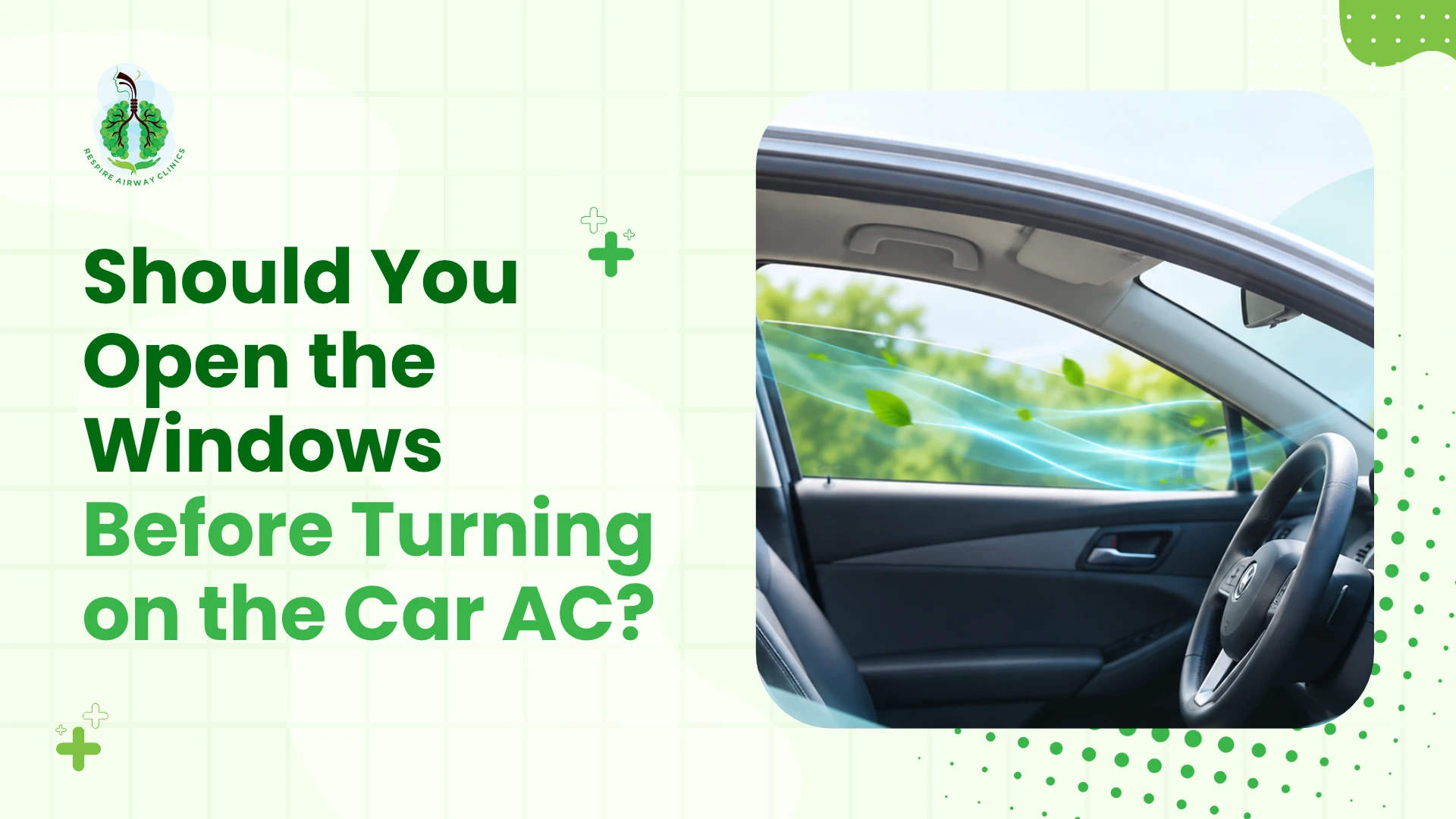
You get into your car after it has been parked in the sun. The cabin feels unbearably hot. There is a strange smell inside, and the air feels stuffy. So you open the windows, let the hot air escape for a minute or two, turn on the AC, close the windows, and start driving.
Most people do this without thinking twice.
But have you ever wondered what happens to the air inside your car when you do this? More importantly, does opening the windows actually make the air you breathe healthier?
The answer depends on what is inside your car and what is outside it.
Why Does Your Car Smell Different After Sitting in the Sun?
A parked car can become significantly hotter than the surrounding outdoor temperature. Sunlight heats the dashboard, seats, upholstery, plastic components, and other interior materials.
Some of these materials release volatile organic compounds (VOCs), which can contribute to the characteristic smell of a hot car. Dust, food residue, moisture, and other contaminants can also affect cabin air quality.
This is why a car that has been parked for several hours may smell different from one that has been continuously ventilated.
Opening the windows helps exchange the accumulated cabin air with outdoor air. It can reduce the concentration of some compounds released inside the vehicle, although the effectiveness depends on airflow, temperature, and the pollutants involved.
The familiar smell of a hot car is not, by itself, a reliable measure of how polluted its air is.
Does Opening the Windows Before Turning on the AC Help?
Yes, opening the windows briefly can help remove some of the hot, stale air accumulated inside a parked car.
However, there is an important distinction between removing accumulated cabin air and improving the air you breathe.
If outdoor air is relatively clean, ventilation can help dilute pollutants originating inside the vehicle. If outdoor air contains heavy traffic emissions, dust, or other pollutants, opening the windows can introduce those contaminants into the cabin.
A 2025 study conducted in Kanpur, India, examined particulate matter inside cars under different ventilation settings. It found higher particulate exposure with open windows than with AC recirculation under the conditions studied.
This is particularly relevant to people driving through congested urban roads.
What Happens When You Switch the AC to Recirculation?
Most cars have two basic air intake settings:
- Fresh air mode: The ventilation system draws outdoor air into the cabin, usually through the cabin air filter.
- Recirculation mode: The system primarily circulates cabin air instead of continuously drawing in outdoor air.
Recirculation can reduce the entry of roadside pollutants when outdoor air is heavily contaminated. This is particularly useful when driving behind buses, trucks, or vehicles emitting exhaust.
However, recirculation is not the same as air purification.
The system does not automatically remove every pollutant already present inside the cabin. Some contaminants may remain or accumulate, depending on their sources and the vehicle's filtration system.
Prolonged recirculation can also allow carbon dioxide levels to rise, particularly when several people are travelling in the vehicle.
The goal should be to balance ventilation with protection from outdoor pollution.
Can Car AC Air Affect People With Asthma or Allergies?
For people with asthma, allergic airway disease, or other respiratory conditions, the quality of the air inside a vehicle can matter.
Roadside pollution, dust, and certain airborne irritants can trigger symptoms in susceptible individuals. Exposure may contribute to coughing, wheezing, chest tightness, or breathing discomfort.
A poorly maintained cabin air filter may also allow more particles to circulate through the ventilation system than an effective, properly maintained filter. However, not every unpleasant smell or episode of breathing discomfort inside a car indicates asthma or an allergy.
Different conditions can produce similar symptoms. If you regularly experience breathing difficulty while travelling, it may be worth discussing the pattern with a respiratory specialist. You can learn more about asthma diagnosis and treatment at Respire Airway Clinics, including how pulmonologists evaluate symptoms, identify triggers, and assess lung function.
What Is the Better Way to Ventilate Your Car?
There is no single ventilation setting that is ideal in every situation. A few practical habits can help reduce unnecessary exposure.
1. Ventilate Before Cooling the Cabin:
If your car has been parked in the sun, open the doors or windows briefly in a safe, suitable location to allow accumulated heat and cabin air to escape. Once the initial hot air has dispersed, close the windows and switch on the AC.
2. Use Recirculation in Heavy Traffic
When driving through congested roads or behind vehicles emitting exhaust, recirculation can reduce the amount of polluted outdoor air entering your cabin. Avoid treating recirculation as a permanent setting for every journey. Allow fresh air into the cabin when outdoor conditions are suitable.
3. Maintain the Cabin Air Filter
The cabin air filter helps capture airborne particles entering through the ventilation system. Its performance depends on the filter type, condition, and maintenance. Follow the vehicle manufacturer's recommended replacement schedule. If you frequently drive through dusty conditions, ask your service technician whether the filter needs more frequent inspection.
4. Pay Attention to Persistent Odours
An unpleasant smell that repeatedly returns may indicate a problem with the cabin filter, moisture accumulation, microbial growth, or another source inside the ventilation system. Do not simply mask persistent odours with fragrances. Identify and address the source.
When Should You Take Breathing Symptoms Seriously?
Occasional discomfort from a strong smell does not necessarily indicate a respiratory disease. However, recurring symptoms deserve attention, especially if you experience:
- Wheezing or chest tightness while travelling
- Coughing that repeatedly worsens inside the car
- Breathlessness during ordinary activities
- Symptoms that become worse around dust, traffic pollution, or strong odours
- Night-time coughing or frequent asthma symptoms
These symptoms can have several causes. A clinical assessment can help distinguish asthma, allergic airway disease, other respiratory conditions, and non-respiratory causes.
At Respire Airway Clinics, our pulmonologists evaluate conditions such as asthma, COPD, chronic cough, and unexplained breathing difficulties.
The clinic also brings ENT and allergy care into the same treatment approach when upper-airway conditions contribute to respiratory symptoms.
References
- https://www.sciencedirect.com/science/article/pii/S1309104225001862
- https://www.sciencedirect.com/science/article/pii/S0269749116304213
- https://pmc.ncbi.nlm.nih.gov/articles/PMC10076388/
- https://pmc.ncbi.nlm.nih.gov/articles/PMC5544137/
- https://pubs.rsc.org/en/content/articlehtml/2025/em/d5em00194c
- https://www.mdpi.com/2073-4433/16/11/1238