CPAP Machine Price in India: What You'll Pay and How to Buy Right
A doctor-reviewed price guide for patients comparing CPAP machines, brands, accessories, and reimbursement options in India.
Medical disclaimer: This page is for information only. CPAP is a prescription medical device. Pressure settings must come from your sleep study, not a price filter on a website. Consult a sleep physician before buying.
By Dr. Pradyut Waghray, MBBS, MD, FRCP (London), FCCP, FAMS. Last reviewed: 2026-05-13
You have just been prescribed CPAP. Now you are looking at machines that run anywhere from ₹20,000 to ₹80,000, and trying to work out whether the expensive one is actually better. Most price guides stop at the table. This one starts with the question almost every online buyer skips.
CPAP machines in India start at roughly ₹18,000 for a basic fixed-pressure model. Premium auto-adjusting devices with a heated humidifier run ₹70,000 and above. BiPAP, which is a different prescription, goes higher still. The right machine is not the cheapest or the most expensive. It is the one that matches your AHI score and the pressure your titration study confirmed.
We say this because we see the alternative every week. A patient walks into our clinic months after a private CPAP purchase, frustrated that the therapy is not working. Usually the device is fine. The pressure was guessed.
What Does a CPAP Machine Cost in India?
CPAP machines in India fall into three categories. Each has its own price band and a specific clinical use. BiPAP is not a tier upgrade; it is a different prescription.
| Machine type | Price range (INR) | Best for | Common brands |
|---|---|---|---|
| Fixed / Standard CPAP | ₹18,000 to ₹35,000 | Stable AHI, titration confirmed, price-sensitive buyer | Oxymed, BMC, BPL |
| Auto CPAP (APAP) | ₹30,000 to ₹70,000 | Variable AHI, position-dependent OSA, comfort-focused | ResMed, Oxymed, BMC, Fisher & Paykel |
| BiPAP | ₹50,000 to ₹1,00,000+ | Complex OSA, obesity hypoventilation syndrome, COPD overlap | ResMed, Philips (post-recall), Lowenstein |
If you do not yet have a sleep study, the price comparison is premature. The first step is a home sleep study to confirm your AHI. Once you have your titration result, you have the inputs the price table actually needs.
Fixed CPAP vs Auto CPAP: What the Price Difference Buys You
An auto CPAP costs roughly ₹12,000 to ₹35,000 more than a fixed-pressure machine. Here is what you are paying for.
Fixed CPAP
Delivers one pressure all night. Your doctor sets it from your titration study. Simple, reliable, lower cost. For patients with stable AHI and a clean titration, a properly set fixed CPAP performs as well as auto CPAP.
AASM accepts both as first-line therapies for uncomplicated OSA (2019 clinical practice guideline).
Auto CPAP (APAP)
Watches your breathing breath by breath. Raises pressure when airway narrowing is detected, drops back when the airway is open. Recommended when AHI varies by sleep position, or when titration has not yet settled on a single pressure.
Best for variable AHI, new CPAP users, and patients with weight-related pressure variation.
When the upgrade is worth it
AHI varies a lot between sleep stages or positions. Titration pressure not yet settled. Pressure feels too high during light sleep. Travel frequently.
When fixed CPAP is the right call
Titration settled on a single effective pressure. AHI is consistent. You want a simpler, lower-cost device.
CPAP Machine Brands in India: What You Get at Each Price Point
Brands differ on three things that matter for patients: after-sales service, the quality of data the machine logs, and the comfort algorithm. Price is mostly a reflection of those three.
ResMed
The clinical reference, at a premium
The AirSense 10 and AirSense 11 are the most commonly prescribed auto CPAP devices seen in clinic. Detailed data reporting, the MyAir app for patient feedback, and the largest Indian service network among CPAP brands. The trade-off is price.
Oxymed
Indian-made with local service
Made in India. Pricing roughly 30 to 40% below ResMed for similar feature sets. For patients in tier-2 cities where ResMed service centres are harder to reach, an Oxymed APAP supported by a local service relationship often outperforms a premium machine that has to be shipped for repair.
BMC
Budget-friendly, with caveats
Suitable for uncomplicated, stable OSA with a confirmed titration pressure. Not the right choice for AHI above 30 events per hour or significant oxygen desaturation, where finer pressure control and more detailed data reporting matters more than the saving.
Philips Respironics
The recall and what it means in 2026
Between 2021 and 2023, Philips recalled millions of CPAP and BiPAP machines globally over a foam degradation risk (U.S. FDA safety communication). Older DreamStation models should not be bought new. Newer redesigned models have re-entered some markets, but Indian availability and after-sales support remain inconsistent. For most patients starting therapy today, ResMed or Oxymed is the cleaner choice.
If you own a recalled Philips device, register it with Philips directly and bring it in for review.
Respire does not endorse a specific brand. The right machine is decided by the prescription and the patient's profile, not by the badge on the case.
The Real Cost of CPAP: Accessories, Consumables, and Annual Upkeep
The machine is a one-time spend. The accessories are not. Budget for both before you compare sticker prices. Most patients spend ₹10,000 to ₹18,000 per year on consumables, about ₹800 to ₹1,500 per month.
| Accessory | Replace every | Cost per unit | Annual budget |
|---|---|---|---|
| Nasal mask (full assembly) | 3 to 6 months | ₹3,500 to ₹6,500 | ₹7,000 to ₹13,000 |
| Nasal pillows | 1 to 3 months | ₹1,500 to ₹3,500 | ₹6,000 to ₹14,000 |
| CPAP tubing | 3 to 6 months | ₹800 to ₹1,500 | ₹1,600 to ₹3,000 |
| Disposable air filter | 1 month | ₹300 to ₹500 | ₹3,600 to ₹6,000 |
| Humidifier water chamber | 6 to 12 months | ₹4,500 to ₹16,000 | ₹4,500 to ₹16,000 |
Renting vs Buying a CPAP Machine in India
CPAP rental is a legitimate option. In some cases it is the right first step.
When renting first makes sense
Rental costs in India
Fixed CPAP: ₹3,000 to ₹4,500 per month. Auto CPAP: ₹4,000 to ₹6,000 per month. Masks and filters usually separate.
When buying is the better choice
Insurance and CGHS Reimbursement for CPAP in India
You may not have to pay the full price out of pocket. Two coverage routes apply in India.
CGHS coverage
The Central Government Health Scheme reimburses CPAP and BiPAP machines for eligible beneficiaries up to ₹45,000 plus applicable GST. You need a valid prescription, the sleep study report, and an itemised invoice from an authorised supplier. (CGHS Office Memorandum on revised rates for medical equipment, Ministry of Health and Family Welfare.)
Private health insurance
Coverage varies widely. Look for “Durable Medical Equipment” (DME) in your policy schedule. Call your insurer before you buy and ask:
Documents you will need for any claim
The Step Most Online Buyers Skip: Prescription, Titration, and Setup
A CPAP machine set to the wrong pressure will not treat your sleep apnea. It will run all night and change nothing. That is the most common story heard from second-opinion patients.
A titration study finds the specific air pressure that keeps your airway open through every sleep stage and sleep position. Without that number, your machine setting is a guess. A mild OSA patient with an AHI of 8 typically needs a lower pressure than a moderate patient with an AHI of 25. The number is calibrated to your physiology, breath by breath, while a technologist watches the airflow trace.
We regularly see patients who bought a CPAP online, set the pressure to whatever the supplier suggested, and used it faithfully for months. In many cases the pressure was set too low for their actual AHI. In others it was set too high and they stopped using it after the first month. The first purchase was wasted. So were the months of poor sleep that followed. This is the cost the price tag does not show.
At Respire Airway Clinics, we review your sleep study results, recommend the specific machine type suited to your AHI, and set the correct starting pressure before you leave the clinic. We re-check compliance data at four to six weeks and adjust if needed. If you do not yet have a sleep study, a home sleep study in Hyderabad is the starting point.
Your Specialists
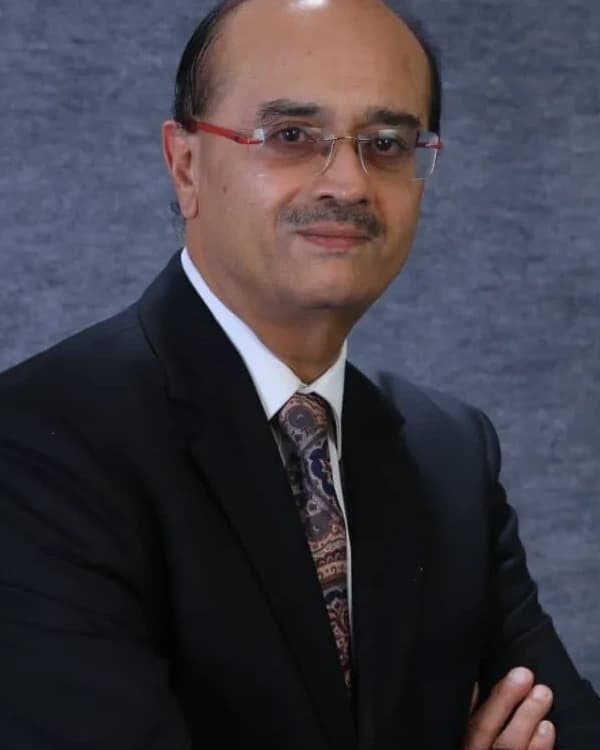
Dr. Pradyut Waghray
Founder & Senior Respiratory Physician
MBBS, MD, FRCP (London), FCCP, FAMS

Dr. Kunal Waghray
Interventional Pulmonologist & Bronchoscopy Specialist
MD, DM, DNB, MNAMS, EDRM
Frequently Asked Questions
Can I buy a CPAP machine without a prescription in India?
For safe and effective use, a prescription is required. CPAP is a medical device and the pressure setting must come from your sleep study. Buying without a prescription means guessing the pressure, and the wrong pressure means your sleep apnea is not actually being treated even though the machine runs every night.
Which CPAP brand is best in India: ResMed, Oxymed, or BMC?
There is no single best brand for every patient. ResMed's AirSense 10 has the deepest service network and the most detailed data reporting, which makes it the clinical reference. Oxymed offers Indian-made value with local service support. BMC is suitable for uncomplicated, stable OSA on a tight budget. Your AHI severity and your need for service support drive the right answer.
Is auto CPAP (APAP) better than a fixed-pressure machine?
APAP is not clinically superior to fixed CPAP in every case. For patients with consistent AHI and a confirmed titration pressure, a properly set fixed CPAP performs equivalently at a lower cost. APAP adds value when your AHI varies with sleep position, alcohol use, or weight change, or when titration has not yet settled on a single pressure.
What is the lifespan of a CPAP machine in India?
Most CPAP machines are designed for five to seven years of use. ResMed and similarly engineered machines typically run reliably for five-plus years with regular cleaning and filter changes. Budget machines may need replacement closer to four or five years. Plan around your warranty and service history.
Does health insurance cover CPAP machines in India?
CGHS reimburses up to ₹45,000 plus GST for eligible beneficiaries with a valid prescription, sleep study report, and supplier invoice. Private insurance varies widely. Look for Durable Medical Equipment or DME coverage in your policy schedule, and call your insurer before you buy to confirm what documentation they require.
How much do CPAP masks cost in India?
A full nasal mask assembly costs ₹3,500 to ₹6,500. Nasal pillow systems cost ₹1,500 to ₹3,500. Masks need replacement every one to six months depending on type and use. Most patients budget ₹6,000 to ₹14,000 per year on mask replacements.
What is the difference between CPAP and BiPAP, and which one do I need?
CPAP delivers a single pressure for both inhalation and exhalation. BiPAP delivers a higher pressure on inhalation and a lower pressure on exhalation, which suits patients who cannot tolerate continuous high pressure or who have additional ventilation needs. The choice is clinical, not preferential. See our CPAP vs BiPAP guide for when each is indicated.
Can I rent a CPAP machine in India before buying?
Yes, and for first-time users this is often the better starting point. Monthly rentals run ₹3,000 to ₹6,000 depending on machine type. A one to three month rental lets you confirm tolerance and compliance before you commit to a purchase of ₹40,000 or more.
Book Your CPAP Consultation
The question is not which machine costs less. The question is which machine your sleep study says you need, and at what pressure. Book a CPAP consultation at Respire Airway Clinics at Basheer Bagh or Jubilee Hills. We review your sleep study, recommend the right machine type, and set the correct starting pressure so you start therapy correctly the first time.