
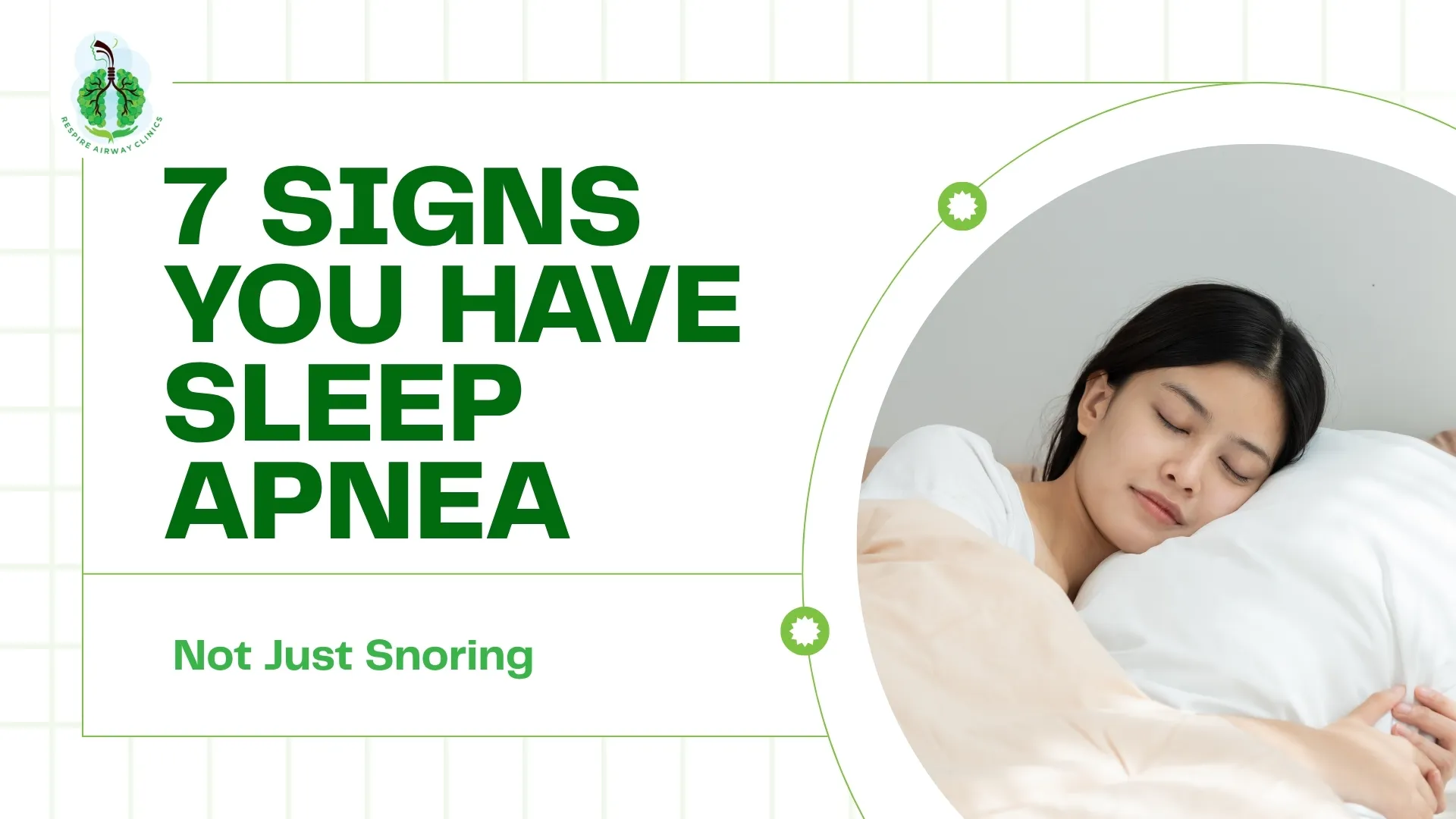
Snoring can be a sign, but it is not the most important one. Even some people with sleep apnea don't snore at all. The signs that really matter the most are the ones you notice when you are awake. Sleep apnea happens when your airway repeatedly closes when you are asleep. It lowers your oxygen level and keeps waking up your brain to restart breathing. It sometimes happens dozens or even hundreds of times a night.
Due to this, your sleep keeps getting affected. You don't get enough deep, restful sleep, and you wake up feeling tired. The situation looks as if you have barely slept at all.
Sign 1: You Wake Up Tired Even After A Full Night Of Sleep
It is one of the most common signs that people usually ignore. You must have heard people saying, "I sleep 7-8 hours, but I still feel exhausted." Most assume that they just need more sleep and try to stay in bed longer. However, the real problem is not about how long you sleep, but how well you sleep.
Your sleep gets interrupted when you have sleep apnea. So, your brain can't reach that deep, restful level of sleep. As a result, even if you sleep for 8 hours, it feels like only 3-4 hours of real rest.
So, if you regularly wake up feeling unrefreshed, no matter how much you sleep, the real cause can be sleep apnea.
Sign 2: Morning Headaches
When you wake up with a headache that goes away within an hour or two, it can be a sign of sleep apnea. During the night, breathing interruptions can lower oxygen and raise carbon dioxide levels.
These can cause headaches. They are usually dull, you feel on both sides of your head, and not like a migraine. The condition improves slowly in the morning.
Most people even take painkillers for those headaches without knowing the real cause. They actually connect the reason with their sleep. So, here is a simple question: Do you get headaches primarily in the morning? It can be an enough sign to raise suspicion.
Sign 3: You Fall Asleep During The Day Without Knowing the Reason
It does not only mean you are tired, but it is actually known as dozing off when you should be awake. For example, you fall asleep during meetings, when reading, watching TV, or when driving or waiting at traffic lights.
Such a condition is known as excessive daytime sleepiness (EDS). It is a strong sign that your sleep at night is not good enough. Sometimes doctors use the Epworth Sleepiness Scale. It is a validated 8-question tool that scores daytime sleepiness.
If you have a score of more than 10, it means significant sleepiness, and you need a formal checkup. In case the condition is not treated, it can lead to untreated severe sleepiness from sleep apnea. As a result, the risk of road accidents increases by 2-3 times.
Sign 4: You Wake Up To Urinate Two or More Times At Night
People usually relate waking up at night to urinate due to age, prostate issues, or drinking too much water before bed. However, sleep apnea is a common but mostly overlooked cause. When your breathing repeatedly stops during sleep, it can put stress on your heart and chest. Your body gives signals to your kidneys to produce more urine, making you wake up frequently to go to the bathroom.
An important note: treating sleep apnea can reduce or even completely stop the problem without any need for separate urinary treatment.
Sign 5: Your Blood Pressure Is Difficult To Control
If you are on one or more blood pressure medicines, and your numbers are still not improving, sleep apnea can be the reason. About half of the people with obstructive sleep apnea also have high blood pressure. Each time your breathing stops during sleep, your body triggers a "fight or flight" response that causes a sudden increase in blood pressure.
Over time, these continuous spikes can keep your blood pressure high all the time. That's why it becomes harder for the standard medications to work, because the root cause, sleep interruptions, is still there. Treating sleep apnea can lower blood pressure by about 2-10 mmHg on average and can even reduce the need for medications.
Sign 6: You Feel Irritable, Anxious, or Low Without Any Clear Reason
Poor sleep from untreated sleep apnea can affect your mood, thinking, and even emotions. Most people are diagnosed with anxiety or depression when the real problem is poor sleep. If your mood swings start around the same time as sleep issues, or if the medication is not helping as expected, it is worth checking for sleep apnea.
Most people also have both insomnia and sleep apnea at the same time. It means they usually struggle to fall asleep and still wake up feeling exhausted. In such cases, both problems need to be checked and treated.
Sign 7: Your Partner Has Noticed Something
A partner is the first person to notice the signs. When your loud snoring suddenly stops, followed by choking or gasping, it's a sign of sleep apnea. Partners also notice restless sleep, frequent turning, or difficulty breathing at night.
Most people only realize the problem when their partner complains about the situation, or even stops sleeping in the same room. If your partner mentions anything unusual about your breathing during sleep, don't ignore it. Those small signs can be an important clue.
What To Do When You Know About These Signs
A home sleep study is the first step. You can even get devices from the clinic, wear them when sleeping at night, and return them the next morning. Your Apnea-Hypopnea Index (AHI), the number of events per hour, is calculated from that data.
If the AHI is above 5 with symptoms or above 15 regardless of symptoms, treatment is necessary. The test can take about a night. The results are definitive. There is no reason to continue guessing. Check out how we diagnose and treat sleep apnea at Respire.