
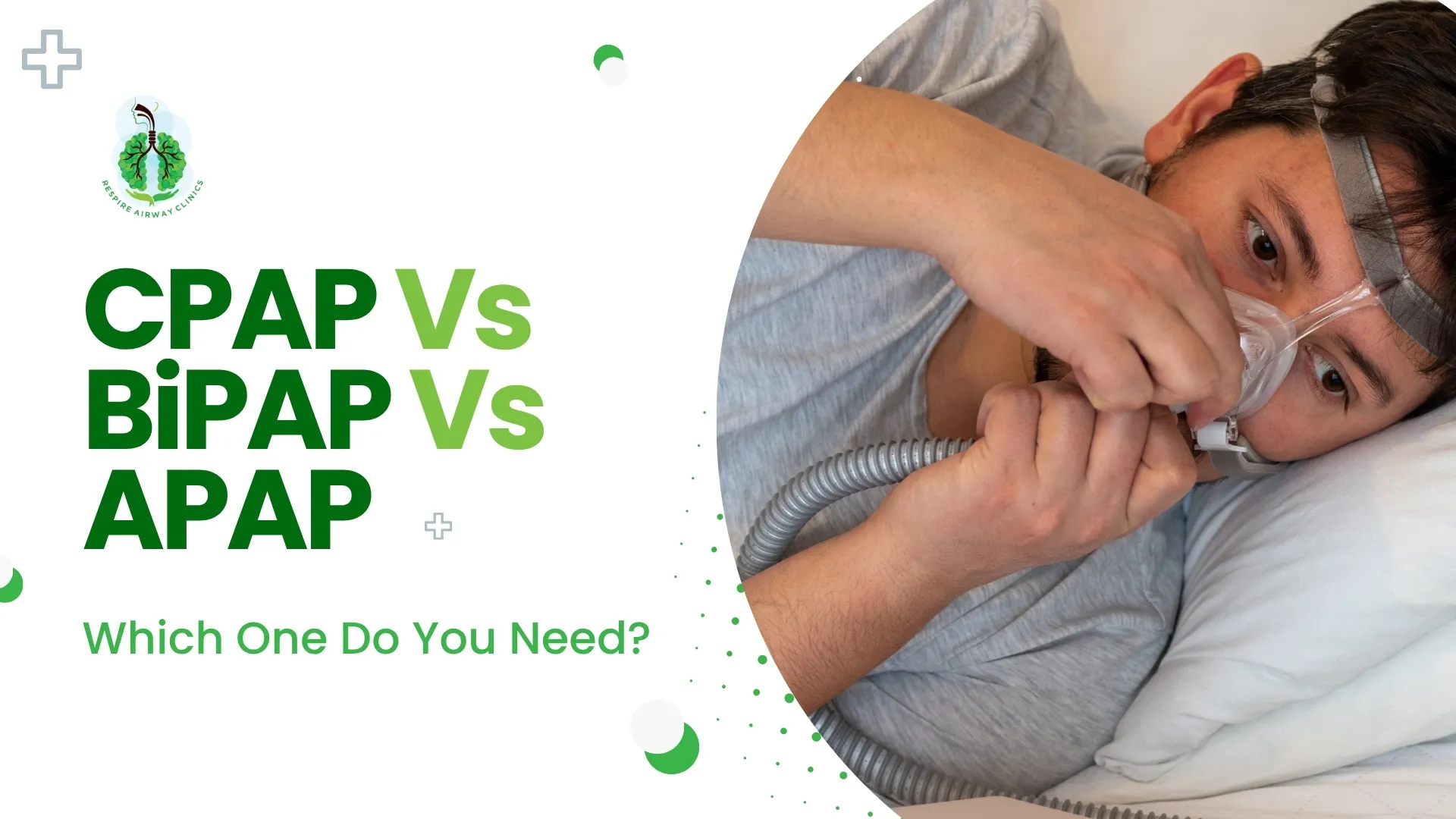
If you have been diagnosed with sleep apnea, it can feel confusing to choose the right therapy. Each type works differently and has its own benefits for the treatment. Here’s what each type does, who it is best for, and how to tell which one you may need.
Why Does The Different Type of Machine Matter?
All three machines send air through a mask to keep your airway open when you sleep. But they don't work in the same way. If you are given the wrong type, it can affect how well the treatment works. You might still have breathing problems even if you use the machine every night. That's why choosing the right machine is just as important as using it regularly.
CPAP (Continuous Positive Airway Pressure)
A CPAP machine provides you with a consistent level of air pressure throughout the night. The pressure stays the same with every breath. Your doctor can set the pressure depending on the sleep study to make sure your airway stays open when you sleep.
Who Is It For?
CPAP works best for people whose airway blockage is fairly consistent throughout the night. Their sleep position or the stage of sleep does not matter here. It is the most common and widely used treatment for sleep apnea.
The Main Drawback
Some people find it uncomfortable because the pressure stays the same all night, especially when breathing out. It is more noticeable at higher pressure levels and is one of the main reasons some people don't use CPAP.
APAP (Auto-Adjusting Positive Airway Pressure)
APAP works like CPAP, but instead of using one fixed pressure, it automatically makes adjustments in the pressure throughout the night. You and your doctor set a pressure range (for example, 6-14), and the machine adjusts the pressure in real time based on your breathing.
Who Is It For?
APAP works well for most people with sleep apnea. It is especially useful if your pressure needs change during the night. Like when you change your sleeping position, enter deep sleep, have nasal blockage, or consume alcohol.
The Main Advantage
It can adjust on its own. APAP is usually more comfortable than fixed CPAP. It usually uses a lower average pressure that is easier to tolerate. Patients who have never had an in-lab titration study can start on APAP. It helps achieve therapeutic AHI levels within the first two weeks. The machine's data helps your doctor check if the settings are working properly.
BiPAP (Bilevel Positive Airway Pressure)
A BiPAP machine gives two different pressure levels. One when you breathe in (higher) and a lower one when you breathe out. It makes breathing feel more natural and easier compared to a single fixed pressure.
Who Is It For?
BiPAP is used in specific situations and is not the first choice. It can be recommended if:
You have central sleep apnea (when the brain is not giving proper signals for breathing).
You can have both COPD and sleep apnea.
You need very high pressure and find it difficult to breathe out with CPAP.
You have conditions that affect your breathing. Those can include obesity-related breathing problems or certain muscle or chest conditions.
What BiPAP Does Not Do
BiPAP is not just a "more comfortable" version of CPAP. It can be used for specific medical reasons. When you switch to BiPAP without the right need, it usually doesn't improve treatment and can be unnecessarily expensive.
What About the Mask?
The machine is only part of the treatment, and the mask is just as important. If the mask doesn't fit properly, even the best machine won't work well. There are masks that suit different people:
Nasal pillow masks are small and work well for most people, especially for side sleepers or those who feel claustrophobic.
Nasal masks are a good option if you need moderate pressure.
Full-Face Masks are better if you breathe through your mouth when sleeping.
A well-fitted mask can prevent common problems such as air leaks, noise, dry mouth, and discomfort. That's why proper mask fitting matters. Ideally, it should be guided by a trained team and not something you are left to figure out on your own at home.
Follow-up is essential
Starting PAP therapy without a follow-up after 4-6 weeks is a common mistake. Your machine records important details like how often breathing stops (AHI), air leaks, how long you can use it, and the pressure levels. Checking such data is the only way to know if the treatment is actually working.
Some patients feel better, but their sleep apnea may still not be fully controlled. A follow-up helps catch it early and even allows your doctors to adjust the settings when needed. See how we manage sleep apnea at Respire.