

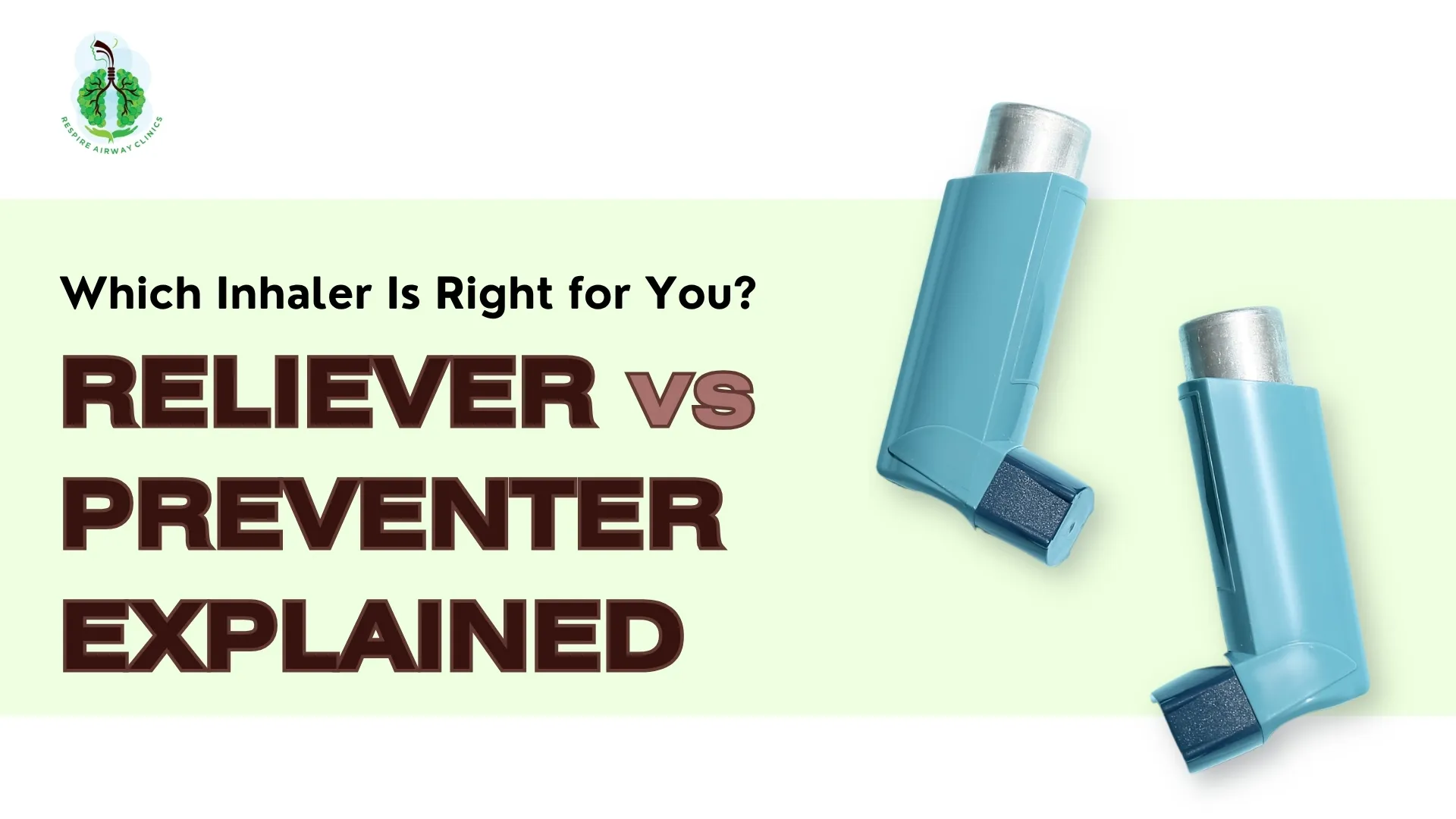
The Two Types Every Asthma Patient Needs To Know
Asthma medicines are of two types: relievers and preventers. Reliever inhalers work quickly to open your airways when you have symptoms. Preventer inhalers work over time to reduce swelling in your airways and stop symptoms from getting worse. Many patients only use their reliever inhaler and avoid the preventer. That's the reason why their asthma stays uncontrolled.
Reliever Inhalers (For Immediate Relief)
Reliever inhalers work fast to open up your airways. They usually contain a medicine known as salbutamol(Ventolin). It starts working in 5-10 minutes. Most relievers are blue. You can use them if you have symptoms like chest tightness, wheezing, coughing, or shortness of breath. If exercise triggers your asthma, use it before exercise.
Relivers only treat the symptoms, not the inflammation in your airways. If you have been using a reliever more than twice a week, it shows that your asthma is not well-controlled. You can talk to your doctor about adjusting your preventer inhaler dose.
Preventive Inhalers (Keep Your Asthma Under Control)
Preventer inhalers contain inhaled corticosteroids (ICS), such as beclomethasone, budesonide, or fluticasone. These can reduce inflammation in your airways and control your asthma better. They are usually brown, red, or orange. You can use them every day, in the morning and evening, even if you feel fine. It can take about 4-6 weeks of regular use to get the complete benefits.
Most people stop using the preventer when their symptoms improve. It allows inflammation to build up again, causing another asthma flare. So, preventers only work when you use them consistently.
Combination Inhalers (Two-in-One Control)
Some patients use a combination inhaler that has both ICS (preventer), which reduces airway inflammation, and LABA (long-acting bronchodilator), which keeps airways open for a long time.
Some of the examples are Seretide (fluticasone + salmeterol) and Symbicort (budesonide + formoterol). These inhalers provide daily asthma control, help keep airways open for long, and some types (MART therapy) can be used as a reliever when symptoms begin.
Tip: Always follow instructions from your doctor. Even combination inhalers can work best when used regularly.
Using Your Inhaler Matters More Than the Device
About 70-80% of people don't use their inhaler correctly. If your technique is not good, the medicine won't reach your lungs properly. Some of the common mistakes are:
-
Not breathing out properly before inhaling
-
Inhaling too quickly (for puff-style inhalers).
-
Not holding for breath for at least 10 seconds after inhaling.
You need to ask your doctor or nurse to watch you use your inhaler at every check-up to make sure you are doing it correctly.
Spacer Devices (Make Your Inhaler Work Better)
A spacer is a small chamber that attaches to your puff-style inhaler (MDI). It slows down the medicine, so you can breathe it in more easily and effectively. When you use it, medicine reaches your lungs better, less medicine stays in your mouth and throat, and it is especially useful for children and adults who find inhalers difficult to use.
When To Check Your Inhaler
You should review your inhaler with your doctor if you are using a reliever inhaler more than twice a week, you are waking up at night due to asthma symptoms, or asthma interferes with your daily activities. A check-up can help adjust your preventer dose or change the type of inhaler to help you get better control of your asthma.