
A Short Answer
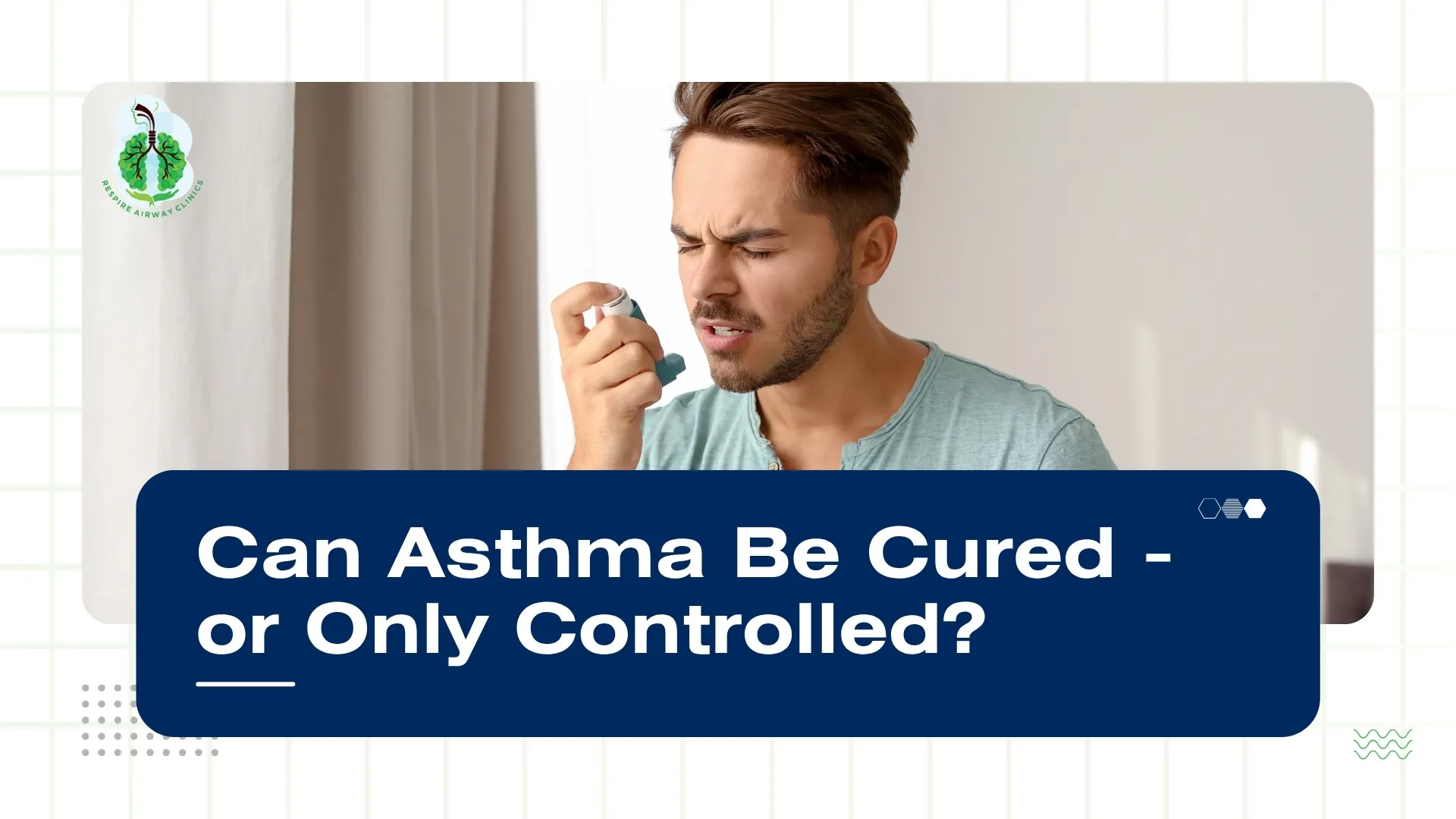
Asthma can't be completely cured for most adults. The airways still stay sensitive and prone to inflammation. But here is an important part: if asthma is managed properly, it does not affect your daily life. You don't have to worry about nighttime symptoms, trouble during exercise, or relying on an emergency inhaler. The aim of the treatment is not just to reduce symptoms, but to help you live a completely normal life.
Childhood Asthma (Some Children Grow Out of It)
About 50% of children with mild asthma become symptom-free when they reach adulthood. It happens because, during the teenage years, their airways grow bigger compared to their lungs. Such a situation can make breathing easier and reduce symptoms.
However, if your symptoms go away, the airways usually remain sensitive. It means asthma can come back later in life. Some of the common triggers for it to return include pregnancy, smoking, and certain jobs or environmental exposure. So, even if it seems like asthma is gone, remember that it is not always permanently cured.
Adult-Onset Asthma (A Different Situation)
When asthma starts in adulthood (at any age, 22 or 55), it doesn't or very rarely go away completely. The reason is that the inflammation process in the airways is more established. Also, most adults have other conditions that keep asthma going. It includes obesity, allergies(rhinitis), acid reflux (GORD), and hormonal changes. The goal here is to control inflammation as much as possible and identify all the factors that can be making the asthma worse.
What "Well-Controlled" Asthma Means
The Global Initiative for Asthma (GINA) defined well-controlled asthma as:
Daytime symptoms that you experience for 2 or fewer days a week.
No nighttime disturbance that wakes you up.
Relief inhaler use for 2 or fewer days a week.
No complications in normal activities and exercise.
When all these conditions are met, the asthma is considered "well-controlled." If one or more of these are not met, you need to get your treatment reviewed by a specialist, no matter how long you have been taking your current medicines.
Immunotherapy (The Closest Thing To A Cure)
Immunotherapy is also known as allergy desensitisation. It is the only treatment that works on the root cause of allergic asthma and not just the symptoms. It is mainly used for people whose asthma gets triggered by specific allergies.
Those include dust mites, pollen, or animals. With treatment for over 3-5 years, it can make the airways less sensitive, reduce the need for medicines, and sometimes make symptoms go away for a long time.
It is not a complete cure, but it can actually change how the disease behaves in the body.
What Should You Aim For?
If you wake up at night because of asthma, use your relief inhaler more than twice a week, or avoid exercise because of breathlessness, then your asthma is not well controlled. These are not the things you should just live with. Instead, with the right check-up, breathing tests (spirometry), and the treatment changes, most people can keep their asthma under control. Book a review checkup if you are not there yet.