What Is a Sleep Study? Types, How It Works, and What to Expect
A plain-language guide to polysomnography and home sleep testing, from a clinic that performs both
Medical disclaimer: This guide is educational. It is not a substitute for personalised medical advice. If you have symptoms of a sleep disorder, please consult a qualified sleep physician before acting on anything written here.
By Dr. Pradyut Waghray, MBBS, MD, FRCP (London), FCCP, FAMS. Reviewed by Dr. Kunal Waghray, MD, DM, DNB, MNAMS, EDRM. Last reviewed: 2026-05-13
Your doctor mentioned a sleep study. Or your partner did, the morning after another night of waking you up to roll over. You nodded, said you would look into it, and then spent the next three days trying to figure out what that actually means.
Here is a plain answer. A sleep study is an overnight recording of your breathing, blood oxygen, brain activity, and heart rate while you sleep. It is the only reliable way to diagnose obstructive sleep apnea (OSA), the most common sleep disorder we see at Respire Airway Clinics, Hyderabad. At our Basheer Bagh and Jubilee Hills sleep labs, Dr. Pradyut Waghray and Dr. Kunal Waghray perform both in-lab polysomnography and home sleep apnea testing. This guide explains both, what each one captures, and which one you are likely to need.
Most patients come in worried about the wires and the sensors. What they do not realise is that those sensors are not even the interesting part of the night. The interesting part is what your pulmonologist sees in the recording the next morning.
What Is a Sleep Study? The Diagnostic Test for Sleep Apnea
A sleep study is the diagnostic test used to identify obstructive sleep apnea, central sleep apnea, and most other sleep disorders. You sleep. Sensors track several body systems through the night. A sleep physician reads the recording afterwards and tells you what your sleep is actually doing.
It is not a brain scan. It is not surgery. Nothing is inserted under the skin. There is no needle.
In a hospital sleep lab, this test is called polysomnography, or PSG. A small clip on your finger tracks oxygen levels. Soft cloth belts around your chest and abdomen measure your breathing effort. A thin tube under your nose records airflow. Wires taped to your scalp and face record brain waves (EEG, an electroencephalogram), eye movements, and chin muscle tone. An ECG lead on your chest tracks heart rhythm. Two small wires on each shin pick up leg movements. Every sensor is taped or pasted to the surface of your skin. Nothing is painful.
The most common reason adults are referred for a sleep study is suspected obstructive sleep apnea (OSA), the sleep disorder in which the upper airway repeatedly collapses during sleep. Each collapse triggers a brief arousal, a microawakening that pulls the brain out of deep or REM sleep to restore airway muscle tone. The person rarely remembers these arousals. But over a night of 30, 50, or 80 such events, the cumulative effect is severe sleep fragmentation: the brain never spends enough time in restorative sleep stages, which is why patients with OSA wake feeling exhausted after eight hours in bed. Each airway collapse also produces a drop in blood oxygen, termed intermittent hypoxia, which activates the sympathetic nervous system, raises blood pressure, and over years drives cardiovascular risk.
A sleep study is the only way to measure these events objectively. Symptoms alone raise clinical suspicion. The AHI score from the recording confirms the diagnosis and its severity.
For a quick sense of how the diagnosis pathway fits together, see our guide on how sleep apnea is diagnosed.
Sleep disorders a sleep study can identify
While OSA is the most common indication, sleep studies diagnose a wider range of conditions:
Not all of these require the same type of study. OSA can often be confirmed with a home Level III device. The others require at least a Level I in-lab polysomnography.
The Types of Sleep Studies for Sleep Apnea Diagnosis
Not all sleep studies are the same. The American Academy of Sleep Medicine classifies sleep monitoring into four levels, and your doctor's recommendation depends on the condition they are trying to diagnose or rule out.
Full In-Lab Polysomnography (PSG)
Minimum of seven channels: EEG, EOG (eye movement), chin EMG, ECG, airflow, breathing effort, blood oxygen. A trained sleep technician attends the recording overnight. Used when more than one disorder is suspected, when home tests have been inconclusive, or when a complex condition like narcolepsy or REM sleep behavior disorder is on the list.
Unattended Portable PSG
Same data channels as Level I, recorded at home with no technician present. Less common in India because of equipment logistics.
Home Sleep Apnea Test (HSAT)
A small four-channel device records airflow, breathing effort, blood oxygen, and heart rate. No EEG, no sleep staging. This is the home test most clinics in India offer, including Respire. Appropriate when obstructive sleep apnea is the primary suspicion in an otherwise healthy adult. The AASM recognises Level III testing as a valid first-line diagnostic for uncomplicated suspected OSA.
Single or Dual-Channel Monitoring
Usually pulse oximetry alone. Useful as an initial screen, not as a full diagnosis.
Which type is right for you?
If your doctor suspects OSA specifically and you have no significant heart, lung, or neuromuscular disease, a Level III home test is a reasonable starting point. If the home result is inconclusive, or if a more complex sleep disorder is suspected, a Level I in-lab study is needed. Your pulmonologist makes this decision, not the patient.
What to Expect at an In-Lab Sleep Apnea Study (Polysomnography)
An in-lab sleep study is less uncomfortable than it looks. Most patients are asleep within an hour of lights-out, and the room is closer to a quiet hotel room than a hospital ward.
Check-in, around 8 to 9 pm
You arrive at the sleep lab. The technician explains the recording and answers your questions. You change into your own night clothes.
Sensor application, 45 to 60 minutes
EEG sensors go on your scalp using water-soluble conductive paste. Cloth belts wrap your chest and abdomen. A nasal cannula sits under your nose. A clip on a finger. ECG lead on your chest. Two small wires on each shin. Nothing pierces the skin. Nothing is painful.
Lights out
You are in a private room, not on a ward. The lights dim. The technician moves to an adjacent monitoring station.
Monitoring through the night
The technician watches the recording from a separate room. A low-light infrared camera lets them see if a sensor comes loose. They watch the data, not you.
Bathroom breaks are fine
Press the call button. The technician detaches the wiring tail from a single port, walks you to the bathroom if needed, and reattaches you when you are back. No sensor comes off your skin.
Wake-up, around 6 am
The technician removes the sensors. The paste in your hair washes out in a single shower with normal shampoo. You go home. Your day continues as usual.
“What if I can't sleep with all those wires?”
The sensors are attached to the surface of your skin. They do not restrict turning, side-sleeping, or stomach-sleeping. The wires are bundled into a single light cable that follows you when you move. The first-night effect, where people sleep lighter than usual in an unfamiliar room, is real, and the recording is calibrated to account for it. In more than 30 years of practice, I have rarely seen this concern translate into an unusable recording.
What Happens at a Home Sleep Apnea Test
A home sleep test is simpler than an in-lab study, and for many patients with suspected obstructive sleep apnea, it captures exactly the data the doctor needs.
What it records
Airflow, breathing effort, blood oxygen, heart rate. Enough data to detect and quantify obstructive apneas and hypopneas in most adults.
What it does not record
Brain activity (EEG), sleep staging, eye movements, or leg movements. A Level III device cannot diagnose narcolepsy, periodic limb movement disorder, or REM sleep behavior disorder.
When a home test is appropriate
Moderate-to-high clinical suspicion of OSA in an otherwise healthy adult. No significant heart failure, COPD, or neuromuscular disease. No suspicion of a non-OSA sleep disorder.
When it is not appropriate
Children. Patients with significant comorbidities. Patients who have already had an inconclusive home test. Cases where the doctor suspects something other than OSA.
If you want the full local pricing and logistics picture, read about home sleep study in Hyderabad.
What Your Sleep Apnea Results Mean: Understanding Your AHI
The number your doctor reads from your sleep study report is called the AHI, the Apnea-Hypopnea Index. It is the average number of times per hour your breathing paused (an apnea) or became severely shallow (a hypopnea) during sleep. If your AHI is 15, your breathing was disrupted roughly once every four minutes through the night. If it is 30, every two minutes.
No clinically significant sleep-disordered breathing.
Sleep disrupted at least 5 times per hour. Many patients report fatigue and non-restorative sleep but have not yet developed cardiovascular changes. Conservative treatment is often tried first: positional therapy, weight management, and close monitoring.
At this severity, cardiovascular effects including elevated nighttime blood pressure and disrupted glucose regulation are well-documented. CPAP therapy is the first-line recommendation (AASM Clinical Practice Guideline, Kapur et al., J Clin Sleep Med 2017).
Breathing disrupted every two minutes or more often. SpO2 may fall below 85% repeatedly. Elevated risk of hypertension, atrial fibrillation, type 2 diabetes, and stroke. Prompt treatment is recommended.
The AHI is not the whole story. Your pulmonologist also looks at your oxygen desaturation pattern, total sleep time, sleep architecture, and body position when events happen. Two patients with the same AHI can end up on different treatment paths. For treatment options by severity, read about CPAP therapy at Respire or the full range of sleep apnea treatment in Hyderabad.
Your Specialists
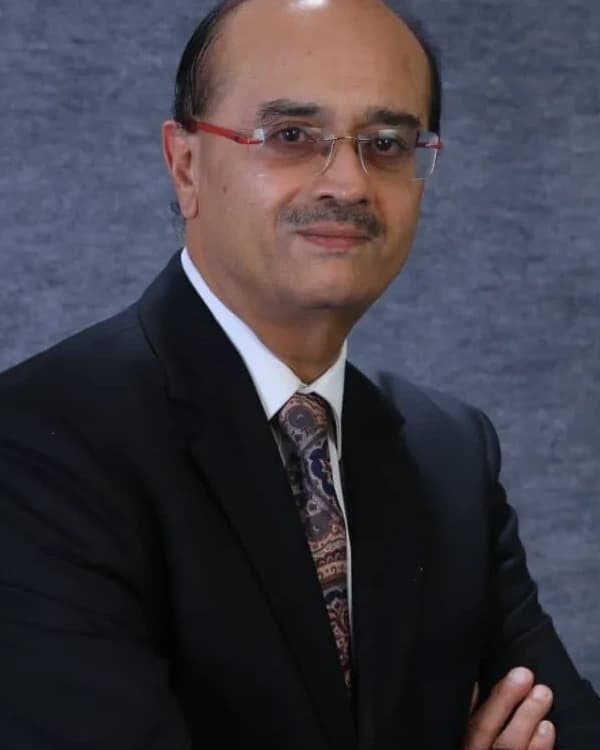
Dr. Pradyut Waghray
Founder & Senior Respiratory Physician
MBBS, MD, FRCP (London), FCCP, FAMS

Dr. Kunal Waghray
Interventional Pulmonologist & Bronchoscopy Specialist
MD, DM, DNB, MNAMS, EDRM
Frequently Asked Questions
Does a sleep study hurt?
No. The sensors are taped or pasted to the surface of your skin. Nothing is inserted, injected, or stitched. The most common sensation is mild scalp tightness from the EEG paste, which washes out with normal shampoo the next morning.
How long does a sleep study take?
An in-lab study typically runs from around 9 pm to 6 am, about nine hours total, of which you usually sleep six to eight. Sensor setup takes 30 to 45 minutes. A home sleep test follows your usual bedtime; you wear the device from when you go to bed until you wake up, then return it.
Can I do a sleep study at home instead of a clinic?
For many adults with suspected obstructive sleep apnea, yes. A Level III home sleep test records breathing, airflow, blood oxygen, and heart rate, which is enough to diagnose or rule out OSA in most uncomplicated cases. It does not record brain activity or sleep staging, so it is not appropriate for diagnosing narcolepsy, parasomnias, or periodic limb movement disorder. Your pulmonologist will decide which is right for you.
Do they watch you the whole time during a sleep study?
A technician watches the recording from a separate monitoring room. A low-light infrared camera lets them see if a sensor comes loose or if you signal for help. They watch your physiology, not you as a person. Privacy is maintained.
What should I avoid before a sleep study?
Skip caffeine after midday on the day of your study. Do not nap during the day. Wash your hair and skip conditioner, hairspray, oils, and styling products, as these stop the EEG sensors from sticking. Do not apply lotion or oil to your chest or legs. Continue your regular medications unless your prescribing doctor has specifically told you otherwise.
How soon will I get my results?
Home sleep test results are usually ready within 48 to 72 hours of the device being returned, because the recording is shorter and the analysis is more focused. In-lab study results are typically reviewed and reported within 5 to 7 working days. We schedule a follow-up consultation to discuss the result with you.
Who needs a sleep study?
The most common reason for referral is suspected obstructive sleep apnea: loud snoring with witnessed pauses in breathing, waking up unrefreshed despite enough time in bed, and significant daytime sleepiness. Sleep studies are also used to investigate narcolepsy, periodic limb movement disorder, parasomnias including REM sleep behavior disorder, and insomnia where a physical cause is suspected. You do not need a GP referral to book a sleep assessment at Respire.
What is a split-night sleep study?
A split-night study combines diagnosis and treatment setup in a single night. The first half is used to confirm OSA. If the AHI is clearly elevated (typically above 40 events per hour in the first two to three hours, per AASM guidance), the second half is used to titrate your CPAP pressure. This saves a second lab night for patients with clearly significant OSA.
Book a Sleep Consultation
You came in with a question: what is a sleep study? Now you know what happens during the night, what the recording captures, and what the number in your report means. The next question is simpler. Do you need one?
At Respire, a pulmonologist reviews your symptoms and history before recommending which type of study is appropriate, so you are not walking into an overnight test without a reason.