Patient education only. This page is general medical information. It does not replace a consultation. If your doctor has scheduled a bronchoscopy with BAL, please bring your imaging and current medication list to your visit.
Bronchoalveolar Lavage (BAL): What It Is and What It Diagnoses
Most patients hear the phrase for the first time the day their bronchoscopy is being explained. The doctor mentions a “wash,” or uses the word lavage, and the patient walks out with the impression that something extra and difficult has been added. It has not. BAL is a five to ten minute step inside the bronchoscopy you have already agreed to.
A small amount of sterile salt water goes into one segment of lung and gets gently suctioned back. The fluid that comes out carries cells and organisms from deep inside the alveoli, which is what the laboratory then examines. A CT scan can show a pattern, but it cannot name an organism, count lymphocytes, or find cancer cells. BAL can.
Written by Dr. Kunal Waghray, MD DM DNB MNAMS EDRM, Interventional Pulmonologist, Respire Airway Clinics, Hyderabad. Published 15 May 2026.
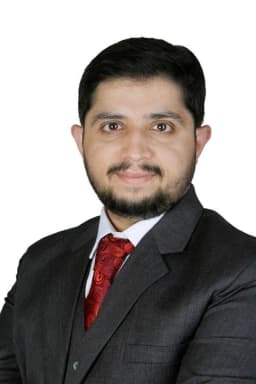
Dr. Kunal Waghray
Interventional Pulmonologist
MD DM DNB MNAMS EDRM
- 1,000+ bronchoscopy and pleural procedures performed
- DM Pulmonology, Amrita Institute of Medical Sciences
- BAL performed at Basheer Bagh and Jubilee Hills clinics
- TB exclusion protocol applied before every ILD immunosuppressant start
What Bronchoalveolar Lavage Actually Is
BAL is not a separate procedure. It is a step performed during a flexible bronchoscopy.
You are already sedated for your bronchoscopy. The bronchoscope, a thin flexible camera, has been guided through your nose or mouth, past the vocal cords, and into the airway tree. When the tip reaches the segment of lung the team wants to sample, the scope is wedged gently into that subsegment. Sterile normal saline at body temperature is then instilled through the working channel of the scope.
The volumes are well-defined. Most centres instil 100 to 300 ml of saline, in aliquots of 20 to 50 ml at a time. Roughly 40 to 60 percent of what goes in comes back out through suction. That returned fluid is the specimen. It is sent in chilled containers to cytology, microbiology, and where indicated, immunology.
Time added
5 to 10 minutes added to the bronchoscopy you have already agreed to.
No extra sedation
The sedation already given for the bronchoscopy covers the BAL as well.
Multiple specimens
Fluid is split into cytology, microbiology, AFB, and special test aliquots at the point of collection.
Why Your Doctor Has Asked for a BAL
A BAL is added to a bronchoscopy when the fluid itself, not just the airway view, is likely to carry the answer. In Indian practice four scenarios dominate the request list:
Lung infection that sputum has failed to identify
Particularly in patients on chemotherapy, on long-term steroids, after a transplant, or living with HIV. BAL samples from the alveoli directly, not the upper airway.
Suspected interstitial lung disease with an unclear HRCT pattern
The cell differential from BAL can narrow the ILD differential sharply before a more invasive tissue biopsy is considered.
Suspected lung cancer where imaging is worrying but no visible tumour is inside the airway
Cancer cells from a peripheral lesion can shed into the alveolar fluid and be detected by cytology.
Rare alveolar process
Alveolar proteinosis, lipoid pneumonia, or alveolar haemorrhage, where the BAL fluid appearance itself is diagnostic.
What BAL Can Diagnose
BAL contributes to the diagnosis of five distinct groups of disease:
Infections
BAL is the most reliable way to identify an exact organism deep in the lung. The fluid is plated for bacteria, sent for AFB smear and TB culture, sent for fungal stains and culture, and where indicated tested for Pneumocystis jirovecii (PCP), Aspergillus galactomannan, and CMV PCR. In a tertiary-centre Indian audit of 91 BALs, 38 bacterial pneumonias and 22 tuberculosis cases were diagnosed, with Klebsiella the most common bacterial isolate (Lung India 2014).
Interstitial Lung Disease
BAL does not replace tissue biopsy for definitive ILD typing, but the cell differential narrows the differential sharply. Lymphocytosis above 25 percent points strongly toward hypersensitivity pneumonitis or sarcoidosis. Eosinophilia above 25 percent is essentially diagnostic of eosinophilic pneumonia. Neutrophilia above 5 percent is seen in fibrotic ILDs and infection. Haemosiderin-laden macrophages confirm alveolar haemorrhage (ATS guideline, Meyer et al., 2012).
Malignancy
Cancer cells from a peripheral tumour can shed into the alveolar space and be picked up by cytology. This is most useful when CT shows a lesion that bronchoscopy cannot see directly, and when the patient is not fit for a transthoracic needle biopsy.
Alveolar Proteinosis
BAL fluid in pulmonary alveolar proteinosis has a characteristic milky appearance, with PAS-positive material. The diagnosis can often be made on the BAL alone, without proceeding to tissue biopsy.
Occupational and Exposure-Related Disease
Lipid-laden macrophages indicate aspiration or lipoid pneumonia. Mineral particles, asbestos bodies, and beryllium responses are detectable when the history points that way.
BAL in the ILD Diagnostic Pathway
For patients who arrive with an unclear HRCT and a suspicion of interstitial lung disease, BAL sits at a specific point in the work-up.
HRCT first
To define a pattern and decide which segment to lavage.
BAL during bronchoscopy
Two jobs at once: exclude infection and run a cell differential. The ATS 2012 guideline supports this stepwise approach.
Tissue biopsy (if BAL does not close the question)
Usually cryobiopsy. In some hypersensitivity pneumonitis cases with strong BAL lymphocytosis, cryobiopsy is not needed.
The single most useful BAL number in ILD is the lymphocyte percentage. A BAL lymphocytosis above 25 percent in a patient with the right exposure history makes hypersensitivity pneumonitis the leading diagnosis. In some of those cases the management decision can be made without proceeding to cryobiopsy, which means one fewer invasive step.
Why TB Exclusion Matters Before Treating ILD in India
Indian respiratory practice has to do something European and American practice does not always have to do. We must exclude tuberculosis before we start corticosteroids.
The reason is straightforward. Many ILDs, particularly hypersensitivity pneumonitis and connective-tissue-related ILD, are treated with steroids and steroid-sparing agents. If active TB is present and missed, those drugs will accelerate it. The consequences range from disseminated TB to death.
BAL on the suspected ILD patient is therefore not optional in our setting. It is the safety check before treatment begins. The BAL specimen is sent for AFB smear, mycobacterial culture, and where available, GeneXpert MTB/RIF. The Joint ICS/NCCP Indian guideline on diagnostic bronchoscopy (Madan et al., Lung India, 2019) endorses this practice.
“Only when the BAL TB workup returns negative, and the clinical picture remains consistent with ILD, do we proceed with the immunosuppressive regimen. This is not defensive medicine. It is the right sequence in a high-TB-burden country.”
Before, During, and After the BAL
Before
You will fast for four to six hours. Your usual medications are reviewed in advance, with attention to blood thinners and anti-platelet agents. The full preparation list for your bronchoscopy applies here too. See our page on what is bronchoscopy if you have not read it already.
During
You are sedated. Local anaesthetic is sprayed in the throat and instilled in the airway. Once the scope reaches the target segment, the saline is instilled and recovered through the same scope. You may feel a sensation of pressure or cool fullness in the chest for a few seconds. Some patients experience an urge to cough during the recovery phase. There is no pain.
After
Recovery is the same as the bronchoscopy you have planned. You are observed for two to four hours. Your gag reflex needs to return before you can eat or drink, which usually takes one to two hours. Mild cough and a small amount of blood-tinged sputum for 24 hours is normal. A low-grade fever in the first 24 hours is also recognised and self-limited. Do not drive for 24 hours after sedation.
When the Results Come Back
Patients almost always ask this question on the way out of recovery. The answer depends on which test was ordered, because BAL fluid is split and sent to several laboratories.
| Test | Typical turnaround |
|---|---|
| Cell differential and cytology | 24 to 48 hours |
| Routine bacterial culture | 48 to 72 hours |
| Fungal smear and PCP testing | Smear within 24 hours; fungal culture 1 to 3 weeks |
| TB AFB smear | Same day to next day |
| TB GeneXpert MTB/RIF | Same day where available in-house, otherwise 2 to 3 days |
| TB mycobacterial culture | 2 to 6 weeks depending on growth |
| Viral PCR (CMV, respiratory viruses) | 3 to 5 days |
Before you leave the procedure room, ask your pulmonologist which specific tests have been sent on your BAL and the expected return date for each one. That single question will save you several anxious phone calls.
BAL Compared with Sputum and with Biopsy
BAL vs sputum
Sputum is what you cough up from the upper airway. It is often contaminated by mouth flora, and the deep alveolar space is not well represented. BAL samples are drawn from the alveoli themselves, under direct vision, in a known location. For TB, for fungal infection, and for any organism that lives below the segmental bronchi, BAL is the more accurate sample.
BAL vs transbronchial biopsy
A biopsy gives you tissue architecture, which is what a pathologist needs to see a UIP pattern or a granuloma. BAL gives you cells, organisms, and chemistry. The two are complementary, and we frequently take both in the same sitting.
BAL vs cryobiopsy
Cryobiopsy is more invasive and produces a larger tissue sample for ILD diagnosis. The usual sequence is BAL first, cryobiopsy only if BAL has not closed the question. In some hypersensitivity pneumonitis cases with a strong BAL lymphocytosis, cryobiopsy is not needed.
How We Do BAL at Respire
BAL at Respire is performed by Dr. Kunal Waghray, who trained in DM Pulmonary Medicine at Amrita Institute, Kochi, and works as the interventional pulmonologist in Hyderabad at our Basheer Bagh and Jubilee Hills centres.
The flow is standardised. The target segment is decided before the procedure, based on your HRCT. The bronchoscope is wedged gently into that subsegment. Warmed sterile saline is instilled and recovered in measured aliquots. The first aliquot is usually discarded as bronchial wash, and the subsequent aliquots are pooled as the alveolar sample. The fluid is split at the point of collection: cytology bottle, microbiology bottle, AFB tube, and a separate aliquot for special tests where indicated.
If a TB or fungal result on your BAL changes your management plan, you are contacted the same day the result arrives. You do not have to wait for the follow-up appointment.
Frequently Asked Questions
What is bronchoalveolar lavage?
Bronchoalveolar lavage, or BAL, is the instillation and recovery of sterile saline from a small segment of the lung during a bronchoscopy. The fluid that comes back carries cells and organisms from the alveoli. It is sent to a laboratory to look for infection, abnormal cell counts, cancer cells, or rare lung material.
Is BAL done separately from bronchoscopy or during it?
BAL is done during the same bronchoscopy. There is no second appointment, no second sedation, and no second airway access. It adds about five to ten minutes to the procedure you have already agreed to.
Does BAL hurt?
No. The bronchoscope is already in place under sedation and topical anaesthesia. You may notice a sensation of cool pressure when the saline goes in, and an urge to cough during the recovery phase, but neither is painful. Most patients describe the BAL portion as the part they remember least.
What can BAL detect?
BAL can detect bacterial, fungal, viral, and tuberculous infections; abnormal cell patterns suggestive of hypersensitivity pneumonitis, sarcoidosis, eosinophilic pneumonia, or alveolar haemorrhage; cancer cells from peripheral tumours; and the characteristic findings of alveolar proteinosis and lipoid pneumonia.
How long does it take to get BAL results?
Cytology returns in 24 to 48 hours. Routine bacterial culture in 48 to 72 hours. Fungal culture takes 1 to 3 weeks, and mycobacterial TB culture up to 6 weeks. GeneXpert MTB/RIF and viral PCR are typically back within a few days.
Is BAL safe?
Yes. BAL adds minimal risk to the bronchoscopy itself. The known side effects are a short cough, mild blood-tinged sputum for up to 24 hours, and an occasional low-grade fever in the first day. Serious complications are uncommon when BAL is performed by a trained operator on a properly selected patient.
How is BAL different from a lung biopsy?
A biopsy removes a small piece of lung tissue for the pathologist to look at architecture. BAL recovers fluid containing cells and organisms. Biopsy answers questions about pattern, such as UIP or granuloma. BAL answers questions about cause, such as which organism or which cell type is dominant. The two are often done together.
Why would my doctor recommend BAL for ILD?
BAL does two jobs at once in an ILD work-up. It excludes infection, particularly tuberculosis, before any immunosuppressive treatment is started. It also provides a cell differential that narrows the differential diagnosis, with lymphocytosis above 25 percent in particular pointing toward hypersensitivity pneumonitis or sarcoidosis.
Sources cited on this page
- Meyer KC, Raghu G, et al. ATS clinical practice guideline: the clinical utility of bronchoalveolar lavage cellular analysis in interstitial lung disease. Am J Respir Crit Care Med. 2012;185(9):1004-14.
- Madan K, Mohan A, Ayub II, et al. Guidelines for diagnostic flexible bronchoscopy in adults: Joint ICS/NCCP (I) recommendations. Lung India. 2019;36(Supplement):S37-S89.
- Baughman RP. Technical aspects of bronchoalveolar lavage. Semin Respir Crit Care Med. 2007;28(5):475-85.
- Diagnostic utility of bronchoalveolar lavage. Lung India (PMC4274523), 2014.
- StatPearls. Bronchoalveolar Lavage. NCBI Bookshelf NBK430762.
Consult Dr. Kunal Waghray for Bronchoscopy with BAL
If you have been advised a bronchoscopy with BAL, or if you are working through an ILD or persistent lung infection diagnosis, you can consult Dr. Kunal Waghray at Respire Airway Clinics in Basheer Bagh or Jubilee Hills. Bring your latest HRCT, your medication list, and any prior bronchoscopy reports.